 Save the Blue Heart of Europe - A campaign for the protection of Balkan Rivers
On the path to EU membership: Is “protected” nature really protected in Albania?
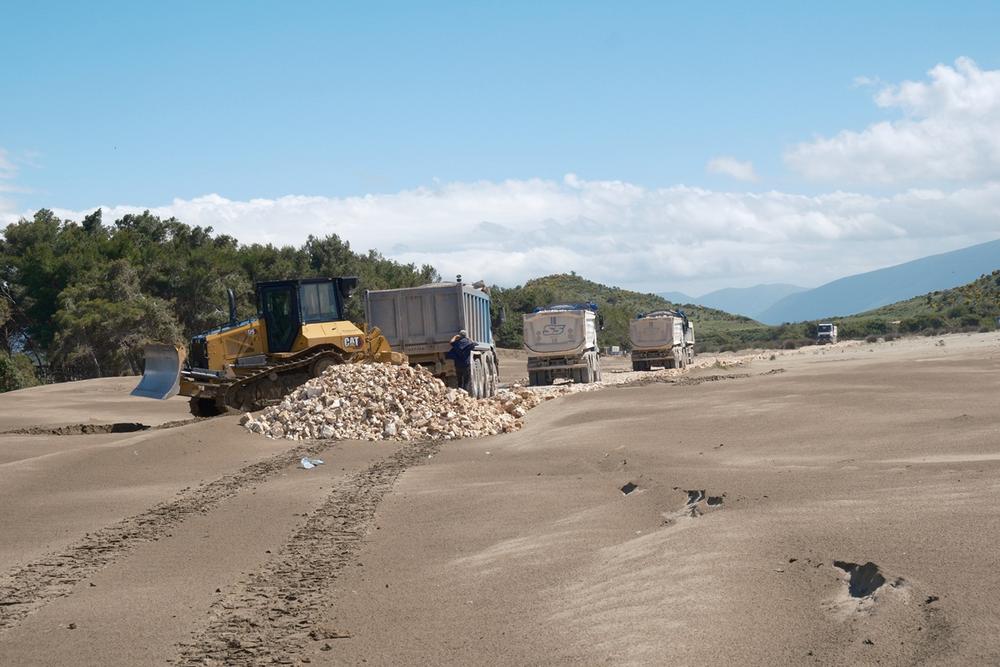
Construction works in the Vjosa Delta in May 2026 sparked the protests in Albania that are still ongoing. © PPNEA
One year has passed since Chapter 27 (Environment and Climate Change) was opened in Albania's EU accession negotiations. Yet progress in alignment with the EU acquis has not been matched by environmental protection in reality. The construction activities and interventions in and around the Vjosa-Narta Protected Area that sparked the so-called Flamingo Revolution have become the most prominent test of whether the EU environmental safeguards will prevent irreversible damage while the accession negotiations are underway.
A pattern of environmental governance failures
Over the past years, a series of decisions related to the Vjosa-Narta Protected Area has exposed persistent weaknesses in environmental planning and decision-making. For example, the construction of Vlora International Airport within the Vjosa–Narta Protected Landscape, the non-inclusion of the Vjosa delta in the Vjosa Wild River National Park, development pressures in Zvërnec, and especially the controversial 2024 amendments to the Law on Protected Areas.
“Together, these are not isolated issues, but a case study in inadequate environmental governance during EU accession. The construction attack in Narta has sparked the Flamingo Revolution, but the issue goes far beyond one single construction site. It challenges the credibility of the enlargement process itself. A discussion on environmental impact assessment was too late; alternatives are not considered, and public participation remains limited. If these issues persist during the accession negotiations, they become a question for the credibility of the enlargement process itself”, says Aleksandër Trajçe, Executive Director of PPNEA.
Additionally, the Albanian government has repeatedly failed to address recommendations from the EU Commission and Parliament, the Bern Convention, the Convention on Migratory Species (CMS), and civil society.
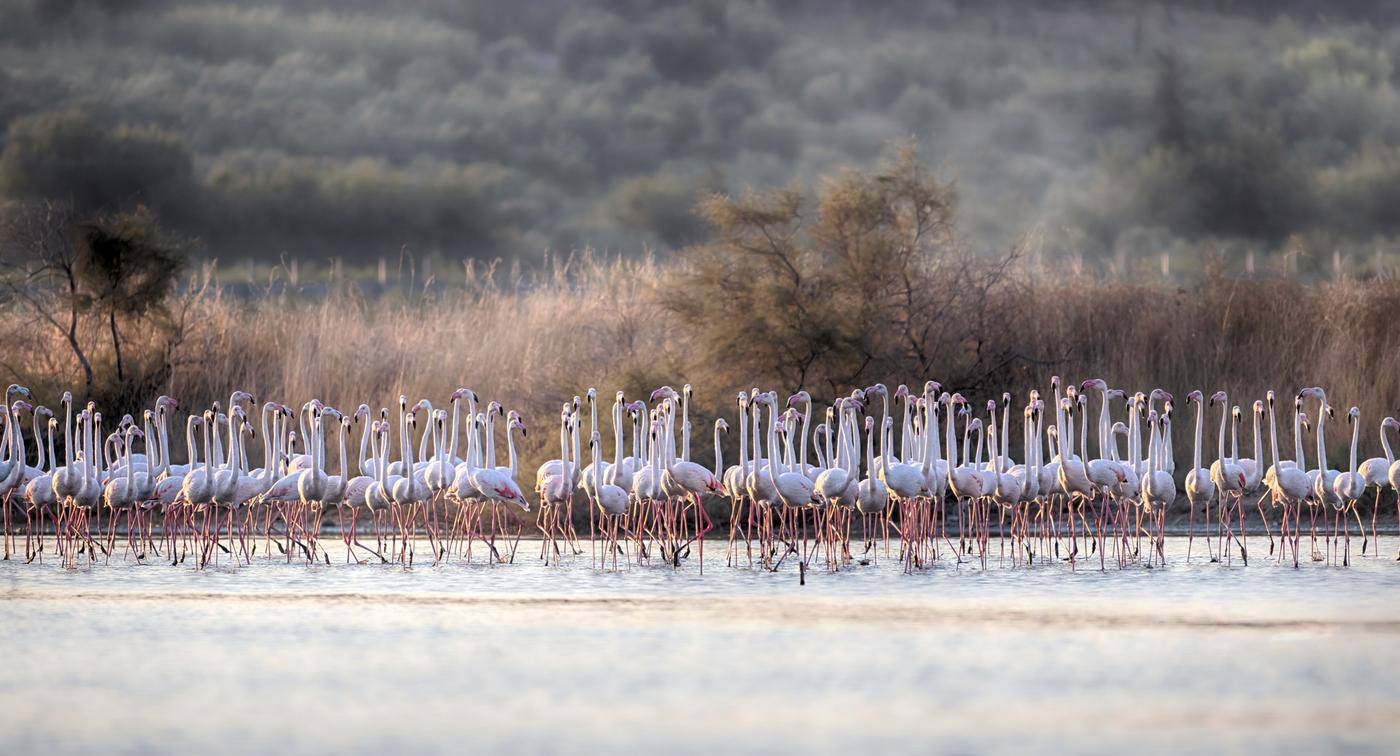
Large numbers of flamingos inhabit the Vjosa Delta, which is an important resting and breeding ground for birds. © Erika Gambos
Risk of irreversible damage to nature
What makes environmental governance different from other negotiating chapters is that ecological damage can be irreversible. Procedures and legislation can be corrected later, while destroyed habitats and ecological systems may not be.
“Chapter 27 cannot become a mechanism for documenting environmental damage after the fact. Its safeguards must operate early enough to prevent irreversible damage from becoming a new status quo. This is not about slowing Albania’s accession, it is about making it work,” says Viktor Berishaj, Senior Policy Officer of EuroNatur.

Flamingo Revolution brings Chapter 27 onto the streets
One year ago, a decision was made to open negotiations with Albania on Chapter 27, and some key benchmarks have been set. Now, in 2026, citizens have gathered in Tirana every day for more than 100 consecutive days in large numbers to protest developments that threaten not only the Vjosa-Narta ecosystem, but ecosystems all over the country. People are exercising their right to demonstrate peacefully, to speak their mind, and to express their hope of soon joining the EU. They are raising the wider and most important question in the EU accession process: will “protected” actually mean protected?
Year two: Prevent, verify and assess
The way forward on Albania’s accession path should be based on the following recommendations:
- No further interventions until the legal framework for protected areas remains unresolved.
- International treaties and recommendations stemming from them must be implemented and their implementation independently verified, rather than replaced by further assurances.
- The first year highlights the need for an intermediate environmental governance assessment within Chapter 27. The progress at the negotiating table should be matched by demonstrable progress on the ground, including effective implementation and enforcement, environmental assessments, assessment of cumulative impacts, public participation, and implementation of international recommendations.